
Business Sign Planning and Design
What type of sign is best for my business?
The right sign depends on your location, audience, viewing distance, traffic speed, building design, local regulations, and business objective. A storefront may benefit from channel letters, while a business set back from the road may need a monument or pylon sign.
How do I choose between a wall sign and a monument sign?
A wall sign identifies the business from the building, while a monument sign provides visibility closer to the road. Properties with deep setbacks, multiple buildings, or concealed entrances often benefit from both.
What information should a business sign include?
Most primary identification signs should emphasize the business name or logo. A short business descriptor, address, or directional message can be added when necessary, but too much information reduces legibility.
How many words should be on a roadside sign?
There is no universal legal limit, but shorter messages are easier to process. As a practical design guideline, try to communicate the essential roadside message in approximately seven words or fewer.
Should my phone number appear on my building sign?
Usually not if the sign is primarily viewed by moving traffic. Phone numbers are more appropriate on vehicle graphics, window lettering, pedestrian-facing signs, and signs viewed from parking areas.
Should I put my website on my sign?
Only when people have enough time to read and remember it. A short web address may work on a vehicle, lobby display, or pedestrian sign but add little value to a fast-moving roadside sign.
Can a QR code be added to a business sign?
Yes, but QR codes should only be used where people can safely stop and scan them. They are generally unsuitable for signs viewed by drivers but can work on lobby signs, displays, windows, parked vehicles, and pedestrian signage.
How large should the letters on my sign be?
Letter size should be based on viewing distance, travel speed, contrast, font, placement, and available reading time. Signs A La Carte can evaluate the property and recommend dimensions appropriate for the actual viewing conditions.
What colors make a sign easiest to read?
High-contrast combinations generally provide the best legibility. The colors should be evaluated in daylight, shadow, rain, and nighttime conditions—not only on a computer screen.
Can I use the same design from my business card on my sign?
Not always. Business cards are viewed close up, while signs may be viewed from hundreds of feet away and for only a few seconds. Logos and layouts often need to be simplified for signage.
Are script fonts difficult to read on signs?
They can be, especially from a distance or when used for long messages. A script logo may still work if its shapes, spacing, contrast, and scale remain recognizable.
How can I make my sign more visible without making it larger?
Improve the contrast, simplify the message, remove competing information, increase letter spacing, strengthen the visual hierarchy, or reconsider the sign’s orientation and placement.
Should an exterior sign match the building?
The sign should complement the architecture without disappearing into it. Materials and colors can coordinate with the property while maintaining enough contrast to remain visible.
Can Signs A La Carte work with my existing logo?
Yes. The logo can be adapted into a sign system while preserving the brand’s recognizable features. Complex details may need to be simplified for fabrication and long-distance visibility.
What artwork files are needed to design a sign?
Vector files such as AI, EPS, or editable PDF files are generally preferred. Brand guidelines, color specifications, font information, and high-resolution reference files are also helpful.
What if I do not have a professional logo?
Signs A La Carte can discuss design options before the sign is engineered and fabricated. It is better to resolve the brand design early than to reproduce an unsuitable low-resolution image.
Can I see what the sign will look like before it is made?
Yes. A sign proposal can include a rendering showing the design, dimensions, colors, and approximate placement on the property. Illuminated projects may also benefit from a nighttime simulation.
How many sign-design revisions are normally included?
The number depends on the proposal and project scope. Before authorizing the work, confirm how many concepts and revisions are included and what changes may result in additional design fees.
Can you match an exact brand color?
Sign companies can work from Pantone, paint, vinyl, and digital color specifications. However, the same color can look different across illuminated faces, paint, vinyl, printed graphics, and computer displays.
What is the biggest mistake businesses make when buying a sign?
One of the biggest mistakes is selecting a sign before defining what it must accomplish. A visually attractive sign can still fail if it is poorly positioned, difficult to read, or unsuitable for the property.
Can I use AI for the design of my sign?
AI tools like ChatGPT, Gemini, Perplexity, Claude, and similar platforms can create impressive logo concepts, and those files often work well for websites and social media. AI-generated logos usually fall short when it comes to producing print-ready files for large-format use.
If you send us a PNG or JPEG created by AI, we may need to convert and rebuild that file before it can be printed properly. This process can include removing the background, correcting pixelation, and preparing the artwork in a format suitable for production. Even when a platform like Canva or Gemini exports a PDF, the file often still contains issues or design inconsistencies compared with the original image.
Because this conversion work can take several hours of designer time, we do charge a fee for it. That said, we are always happy to review our customers’ logo files and let you know whether they are ready for print.
Sign Cost, Estimates and Budgeting
How much does a business sign cost?
Commercial signs can range from several hundred dollars for basic lettering to more than $100,000 for a large engineered pylon sign. Size, materials, lighting, structure, permitting, engineering, and installation all affect the final price.
How much does a storefront sign cost?
Many custom storefront projects fall between several thousand and approximately $20,000 or more. The sign type, width, illumination, wall construction, installation height, permit requirements, and electrical work determine the actual cost.
How much do channel letters cost?
A custom channel-letter project may broadly range from about $5,000 to $20,000 or more. Halo lighting, complex logos, direct mounting, difficult access, engineering, and electrical work can increase the investment.
How much does a monument sign cost?
A smaller fabricated monument may begin around $5,000, while architectural, illuminated, masonry, or multi-tenant monuments can cost $20,000 to $100,000 or more.
How much does a pylon sign cost?
A new engineered pylon sign may range from approximately $25,000 to more than $125,000. Height, foundations, steel, engineering, sign cabinets, electrical service, cranes, and site conditions are major cost factors.
How much does a lobby sign cost?
Many custom lobby signs fall between approximately $500 and $10,000 or more. Lighting, metal finishes, custom fabrication, multiple logo elements, electrical work, and difficult installation conditions increase the cost.
How much do window graphics cost?
Simple door lettering may cost a few hundred dollars, while extensive printed window graphics can cost several thousand. Coverage, film type, printing, laminate, surface preparation, and installation access affect the price.
Why do two similar-looking signs have different prices?
Sign renderings do not reflect the full differences in quality. Signs may vary in material thickness, lighting systems, structural supports, finishes, mounting methods, warranties, and installation equipment. A rendering alone cannot show how well a sign is actually built. Durability is also a critical factor. Lower-cost materials such as acrylic, vinyl, and LED components may last only a couple of years, while higher-quality materials can last 10 years or more.
Does the quoted price include installation?
It depends on the proposal. Installation labor, lifts, cranes, traffic control, travel, removal, electrical connections, and property restoration should be specifically included or excluded.
Are permit fees included in the sign price?
Permit service and permit fees are two separate items.
The permit service cost is typically known upfront and can be included in the quote. This covers the work involved in preparing and submitting the paperwork, communicating with the city or township, and coordinating with an engineering firm if stamped drawings are required. Engineering costs may or may not be included, depending on the proposal.
Permit fees, on the other hand, are the fees charged by the city or township. These usually include a building permit fee and may also include zoning and electrical permit fees. In some cases, additional charges may apply, such as board review fees, variance fees, inspection fees, or resubmission fees. Because every municipality has its own requirements, these costs can vary significantly.
In most cases, municipal permit fees are passed through to the customer. The sign company pays them upfront and is then reimbursed by the customer.
For clarity, a proposal should separately identify permit-preparation services, municipal permit fees, engineering charges, board review fees, electrical permits, and any potential resubmission costs.
Does a sign estimate include electrical work?
The sign’s internal electrical components may be included in the estimate, while the building circuit, disconnect, trenching, timer, photocell, final electrical connection, and electrical permit remain the customer’s responsibility. In some cases, the estimate may include connecting the sign to the electrical junction box, but it does not include any work involving 120V or higher electrical wiring.
Is engineering included in the sign price?
Engineering may be included, listed as an allowance, or charged separately. Large wall signs, projecting signs, monument signs, and pylons are more likely to require structural calculations or sealed drawings.
Why does installation height affect the price?
Higher installations may require specialized lifts, cranes, larger crews, roof access, sidewalk closures, traffic control, or after-hours work. Equipment access can be as important as the sign’s physical size.
Is an illuminated sign much more expensive?
Lighting adds LED modules, power supplies, wiring, service access, testing, electrical coordination, installation complexity, and inspections. It also creates long-term energy and maintenance considerations.
Can an existing sign structure be reused to save money?
Possibly, but its structural condition, foundation, electrical system, dimensions, permits, and legal status should be verified first. Reuse is not a savings if the structure later requires extensive repairs.
Can I finance a commercial sign?
Financing options depend on the sign company, project value, and customer qualifications. Businesses may also investigate equipment financing, leasing, or other commercial funding with their financial advisers.
Are business signs tax-deductible?
Signage may qualify as a business or advertising expense, or it may need to be depreciated as a capital asset. Treatment depends on the project and state legislation, so consult a qualified tax professional.
What should I compare when reviewing sign proposals?
Compare dimensions, materials, thicknesses, lighting, mounting, foundations, permits, engineering, electrical responsibilities, installation equipment, removal, restoration, warranty, and timeline.
Why is the lowest sign quote not always the least expensive option?
A lower proposal may exclude permitting, installation equipment, engineering, electrical work, removal, or higher-quality materials. Compare the complete installed scope rather than the headline price.
How can I establish a realistic sign budget?
Begin with a site survey and preliminary feasibility review. Then budget for design, fabrication, permitting, engineering, electrical work, site preparation, installation, removal, restoration, taxes, and contingencies.
Sign Permits, Zoning and Approvals
Do I need a permit for a business sign?
Most permanent exterior signs require some form of local approval. The exact requirement depends on the municipality, property, zoning district, sign type, dimensions, location, and illumination.
Who issues commercial sign permits?
Sign permits are usually administered by a municipal zoning, planning, building, or construction department. Electrical, historic, transportation, or design-review approvals may be handled separately.
Does Signs A La Carte obtain sign permits?
Permit services can be included in the project scope. The proposal should identify which research, applications, drawings, submissions, fees, hearings, and inspections are included.
What documents are needed for a sign permit?
A typical application may require a site plan, building elevation, dimensions, sign-area calculation, setback, height, mounting details, materials, lighting information, owner authorization, and structural drawings.
How long does a sign permit take?
A straightforward administrative review may take several weeks. Historic review, engineering comments, incomplete submissions, zoning variances, board hearings, and multi-agency approvals can add months.
Can the sign be fabricated while the permit is under review?
That creates financial risk. If the municipality or landlord changes or rejects the design, the fabricated sign may require expensive modification or replacement.
Do I need landlord approval before applying for a permit?
Usually, yes. A landlord may impose requirements that are more restrictive than the municipal sign code, including rules for colors, dimensions, placement, lighting, and mounting.
Is a landlord’s sign approval the same as a sign permit?
No. Landlord approval is private property authorization, while a sign permit is a governmental approval. Many projects require both.
Can I copy the size of a neighboring business’s sign?
Not safely. The neighboring sign may have a variance, be grandfathered, occupy a different zoning district, or predate the current ordinance.
What is a sign variance?
A variance is a formal request to depart from a zoning requirement. It may involve an application, plans, public notice, professional testimony, a hearing, and conditions of approval.
What happens if I install a sign without a permit?
Potential consequences include fines, stop-work orders, permit penalties, required modifications, disconnection of electrical service, or complete removal of the sign.
Do I need a new permit to change an existing sign face?
Some jurisdictions require approval even when only the face, tenant name, or message changes. Confirm the local requirements before ordering replacement faces.
Does an illuminated sign require an electrical permit?
It frequently does. The municipality may require electrical drawings, a licensed contractor, an approved disconnect, listed components, inspection, and a separate electrical permit.
Do temporary banners require permits?
Some municipalities regulate or permit banners based on their size, location, attachment, and display period. “Temporary” does not automatically mean exempt.
Are window graphics regulated?
They can be. Local codes or landlord standards may limit the percentage of glass covered and may regulate promotional messages, opacity, illumination, or placement.
Are sign permits different in Pennsylvania, New Jersey, and Delaware?
Yes, and the requirements also vary within each state. Most sign decisions are property- and jurisdiction-specific, so the exact municipality must be confirmed.
What approvals are required for a sign in Philadelphia?
Philadelphia generally requires zoning approval for sign installation, and a permanent sign may also require building, electrical, Art Commission, or other approvals depending on the project. The city regulates sign number, type, size, location, height, and illumination. City of Philadelphia
Do historic districts have different sign rules?
Often. A historic commission or architectural review board may regulate dimensions, materials, lighting, colors, mounting methods, and the treatment of the building façade.
Can a permit be transferred to a new tenant?
Not necessarily. A tenant change, face replacement, structural alteration, or new business identity may trigger a new application even when the sign structure remains.
Who is responsible if a permit is denied?
Responsibility depends on the contract and reason for denial. The proposal should explain who handles redesign, resubmission, additional fees, hearings, and work already completed.
Exterior Building Signs and Channel Letters
What are channel letters?
Channel letters are individually fabricated letters or logo shapes, often constructed with aluminum returns and acrylic faces. They can be illuminated or non-illuminated.
What is the difference between front-lit and halo-lit channel letters?
Front-lit letters shine through the face toward the viewer. Halo-lit letters illuminate the wall behind the letters, creating a glow around each element.
Can channel letters be both front-lit and halo-lit?
Yes. Combination-lit letters illuminate the face and the wall behind the letters, although not every landlord or municipality permits this configuration.
What is a channel-letter raceway?
A raceway is a narrow enclosure that supports the letters and contains wiring and electrical components. It can reduce the number of wall penetrations and simplify future removal or service.
Are raceway-mounted or direct-mounted letters better?
Direct mounting often creates a cleaner architectural appearance, while a raceway can simplify wiring and installation. Wall construction, landlord criteria, serviceability, and budget determine the best choice.
How are channel letters attached to a building?
They may be individually fastened to the façade or mounted to a raceway. The attachment method must account for wall material, structure, wind exposure, waterproofing, and electrical access.
Can channel letters be installed on brick or stone?
Yes, but masonry construction requires appropriate fasteners, drilling methods, wiring routes, sealing, and structural review. Stone veneer must be evaluated differently from solid masonry.
Can a sign be installed on stucco?
Yes, but the installer must understand what is behind the stucco and avoid relying on the finish alone for support. Exterior insulation and finish systems may require specialized attachments and waterproofing.
What is a cabinet sign?
A cabinet sign places the structure, face, graphics, and often lighting within one enclosure. Cabinets work well for complex artwork, multi-tenant panels, replaceable faces, and some retrofit projects.
What is a blade or projecting sign?
A projecting sign extends perpendicular to the façade so it can be seen by people approaching parallel to the building. It is especially effective in pedestrian districts and closely spaced storefronts.
Do projecting signs require engineering?
They may, because wind places significant force on the sign and its attachments. Clearance, projection, right-of-way, structural support, and local code requirements must be reviewed.
Can you replace the face of an existing cabinet sign?
Often, provided the cabinet is structurally sound, legally usable, correctly sized, and compatible with the new face. The lighting and electrical system should also be inspected.
Can an existing wall sign be moved?
Possibly, but the new location may require different attachments, electrical work, access equipment, landlord approval, and permits. Moving the sign may also expose holes or wall damage requiring repair.
How long do channel letters last?
Well-built letters can remain serviceable for many years, but coatings, faces, LEDs, power supplies, wiring, seals, and fasteners have different lifespans. Exposure and maintenance affect longevity.
Can channel letters be repaired?
Yes. Common repairs include LED replacement, power-supply replacement, face repair, repainting, rewiring, sealing, and attachment correction.
Why is one letter darker than the others?
Possible causes include failed LED modules, a failing power supply, wiring problems, dirt, moisture, aging faces, or uneven internal spacing. An inspection is needed to identify the cause.
Why is water collecting inside my sign?
Water can enter a sign through failed seams, penetrations, damaged faces, or improper installation. Cabinets and channel letters also need proper drainage and ventilation to perform as intended. In reality, most signs are not completely watertight. With LED systems, the presence of some moisture inside the sign is usually not a major issue, as signs are designed to allow water to drain out. That is why you often see weep holes along the bottom of a sign.
Can LEDs replace fluorescent lighting in an older cabinet?
Often, yes. An LED retrofit can improve efficiency and serviceability, but the cabinet, faces, electrical components, spacing, and brightness should be evaluated first.
How bright should an illuminated sign be?
It should be bright enough for recognition without creating glare, washing out the letters, disturbing neighboring properties, or violating local illumination standards.
How long does it take to produce channel letters?
A permitted custom project commonly requires six to twelve weeks or more. Design approval, landlord review, permits, engineering, fabrication, electrical preparation, and installation access affect the schedule.
Monument, Pylon and Multi-Tenant Signs
What is a monument sign?
A monument sign is a freestanding sign with a substantial base or integrated support. It is commonly placed near a road or property entrance.
What is the difference between a monument and a pylon sign?
A monument sign generally stays closer to the ground, while a pylon elevates the sign face on a taller supporting structure. Pylons are often used for high-speed roads, deep setbacks, and obstructed properties.
Does my business need a monument sign?
A monument may be valuable when the building is hard to see, the entrance is unclear, the property contains multiple buildings, or roadside identification is more important than façade identification.
How tall can a monument sign be?
Maximum height is determined by the local sign ordinance, zoning district, setbacks, property frontage, and sometimes a master sign plan. There is no universal height allowance.
How close can a monument sign be to the road?
Setbacks vary by jurisdiction and may be measured from the property line, right-of-way, curb, or another reference point. Sight triangles and underground utilities can further restrict placement. Generally between 10 and 15 feet
Does a monument sign need a concrete foundation?
Most permanent monument signs require an engineered or properly designed support system. Foundation requirements vary based on the sign’s size, weight, structural design, wind exposure (wind load calculation), soil conditions, and applicable code requirements. Frost depth also matters and can vary significantly by location, such as 32 inches in Pennsylvania and 72 inches in Vermont.
Can a monument sign be illuminated?
Yes. Options include internal LEDs, illuminated cabinets, push-through acrylic, halo lighting, or external landscape-style fixtures.
Is internal or external monument lighting better?
Internal lighting provides a self-contained illuminated display, while external fixtures can emphasize dimensional letters and textured materials. Appearance, code, maintenance, energy use, and site conditions influence the choice.
Can a monument sign include multiple tenants?
Yes. Multi-tenant monuments commonly use replaceable panels so names can be updated without rebuilding the entire structure.
How should tenant panels be organized?
Panels should follow a clear hierarchy with consistent sizes, type styles, spacing, and contrast. Allowing every tenant to use an unrestricted design can make the overall sign difficult to read.
Can a monument sign include an electronic message center?
Potentially, but digital displays are more heavily regulated in many jurisdictions. Rules may address brightness, message duration, animation, operating hours, sign area, and distance from residential properties.
Can you add a digital display to an existing monument?
Only after confirming structural capacity, electrical service, dimensions, zoning compliance, ventilation, data connectivity, and service access. A permit or variance may be required.
Can an old pylon structure be reused?
Possibly. The pole, cabinet, welds, foundation, fasteners, electrical system, corrosion, permits, and current code status should be evaluated before reuse.
Why do pylon signs cost so much?
They may require structural steel, deep foundations, large cabinets, engineering, wind-load calculations, electrical service, cranes, traffic control, and complex permitting.
Can landscaping be installed around a monument sign?
Yes, but factors such as mature plant height, irrigation, mower access, drainage, snow storage, lighting, and long-term sign visibility all need to be considered. It’s best to consult a local landscaping company to choose the most suitable plants for the area around your sign.
How do underground utilities affect sign placement?
Gas, electric, water, sewer, communications, irrigation, and drainage lines can restrict excavation or require design changes. It is also important to note that utility marking may not identify privately installed lines. Calling 811 is often a good step to help confirm the area is safe for digging, although this service may involve a separate fee.
Can a monument sign be made to look like brick or stone?
Yes. Options include genuine masonry, thin veneer, fabricated architectural panels, or foam-based systems designed to simulate masonry. Each option has different structural, durability, installation, and maintenance characteristics.
What are foam-based monument signs?
Foam-based monuments use an engineered foam core with protective coatings and architectural finishes. They can create a substantial appearance with less weight than conventional masonry, but construction specifications and impact exposure matter.
How long does monument-sign installation take?
The field installation may take several days, but the complete project often requires eight to sixteen weeks or more. Permits, engineering, foundations, electrical work, curing time, weather, and fabrication affect the schedule.
Can a damaged monument sign be repaired instead of replaced?
Often. Faces, panels, letters, coatings, lighting, trim, and some structural elements can be repaired, but the foundation and internal structure should be assessed before investing in restoration.
Lobby, Interior, Wayfinding and ADA Signage
What is a lobby sign?
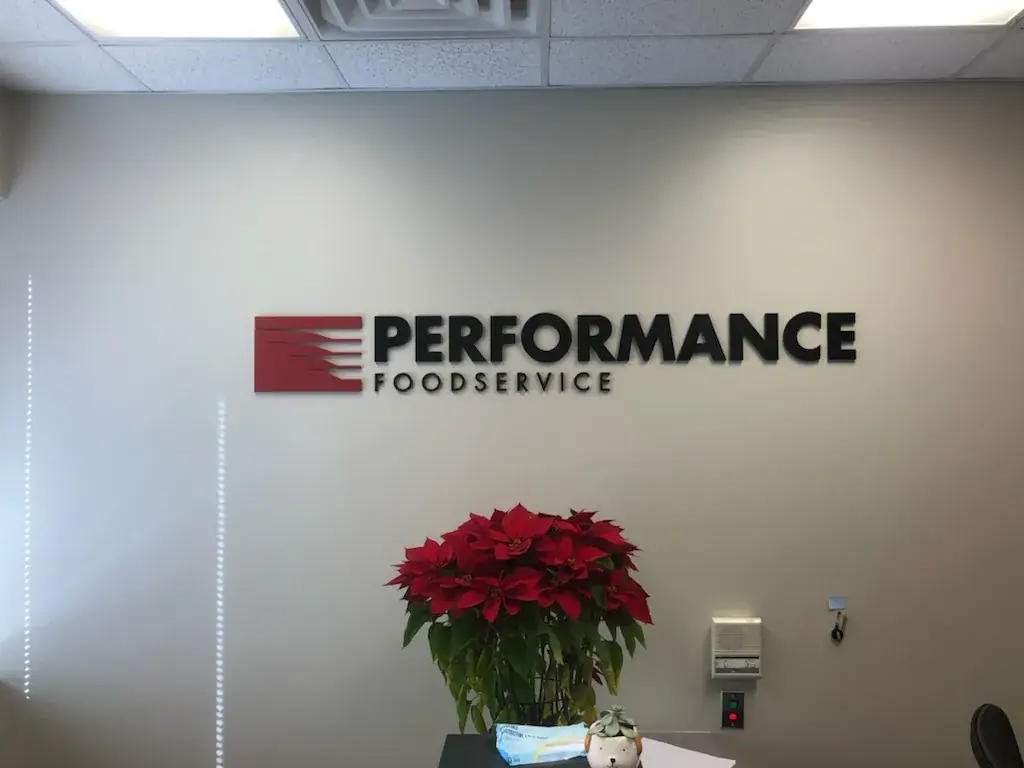
A lobby sign is an interior brand display, typically installed behind reception or in another prominent customer-facing area. It may use dimensional letters, metal, acrylic, printed graphics, panels, or illumination.
Why should a business invest in a lobby sign?
A well-designed lobby sign confirms the location, strengthens brand recognition, and helps communicate professionalism and credibility. It may also appear in photographs, videos, recruiting materials, and social media.
How large should a lobby sign be?
The sign should be proportional to the wall, reception desk, ceiling height, furniture, and typical viewing distance. Accurate field measurements and a scaled rendering help determine the right size.
Can a lobby sign be illuminated?
Yes. Options include halo-lit letters, edge-lit acrylic, internally illuminated cabinets, push-through elements, or concealed accent lighting.
Does an illuminated lobby sign need an electrical outlet?
It needs an appropriate power source, but the wiring can sometimes be concealed behind the wall. Electrical location and access should be reviewed before fabrication.
Can a lobby sign be installed on glass?
Yes, using adhesives, standoffs, suspended mounting, or hardware designed for glass. Glass thickness, access, visibility from both sides, and landlord restrictions must be considered.
Can a lobby sign be moved to a new office?
Some lobby signs can be reused, but removal may damage delicate elements or leave mounting holes. The new wall dimensions, color, construction, and electrical conditions may require modifications.
What is a wayfinding-sign system?
Wayfinding is a coordinated sequence of signs that helps visitors move from the property entrance to parking, the correct building, reception, and their final destination.
How do I know whether my property needs better wayfinding?
Frequent calls for directions, missed entrances, incorrectly parked vehicles, confused visitors, delivery problems, and repeated questions at reception are strong indicators.
What information should appear on a directional sign?
Only the information needed at that decision point. Too many destinations, inconsistent names, or competing arrows slow comprehension and create confusion.
What signs are required to comply with the ADA?
The ADA Standards address signs identifying certain permanent rooms and spaces, accessible features, exits, and other defined locations. Requirements vary by sign function; the U.S. Access Board provides an authoritative overview. U.S. Access Board
Does every sign need Braille?
No. Braille and tactile requirements generally apply to specific signs identifying permanent rooms and spaces. Directional and informational signs may follow different visual requirements.
What is Grade 2 Braille?
Grade 2, or contracted Braille, uses standardized contractions for commonly used words and letter combinations. ADA tactile signs typically use contracted Braille.
Where should an ADA room sign be installed?
Tactile room signs typically must be installed at specific heights and locations near the door. Door swing, approach clearance, and nearby obstructions should all be reviewed before installation. A common standard is mounting the sign 48 inches above the floor, positioned 1.5 to 2 inches from the door frame on the handle side.
Can ADA signs use our brand colors?
Often, provided the design maintains required contrast, non-glare surfaces, character proportions, tactile features, and other applicable standards.
Can ADA signs have decorative fonts?
Tactile and visual characters must satisfy applicable readability requirements. Decorative typography can be incorporated elsewhere in the sign system without compromising required information.
Do temporary room signs need Braille?
Temporary signs are generally treated differently from permanent room-identification signs. The duration, content, facility type, and applicable standards should be reviewed.
Are office directories required to be ADA-compliant?
Directories may not require tactile characters in the same manner as permanent room signs, but visual accessibility requirements can still apply. Confirm the project’s applicable federal, state, and local standards.
Can an existing wayfinding system be updated without replacing everything?
Yes. Signs A La Carte can assess which frames, posts, panels, directories, and mounting systems can be reused while improving terminology, hierarchy, consistency, and accessibility.
Who is responsible for confirming ADA compliance?
Compliance should be coordinated among the owner, architect, code professional, sign company, and authority having jurisdiction. The sign company should not be expected to resolve building-wide accessibility decisions without project information.
Vehicle Lettering, Graphics and Commercial Wraps
What is the difference between vehicle lettering and a vehicle wrap?
Lettering applies separate names, logos, and contact details. A wrap uses larger connected areas of printed or colored vinyl to cover part or most of the vehicle.
What is a partial vehicle wrap?
A partial wrap covers selected areas and incorporates the vehicle’s paint color into the design. It can provide strong visibility at a lower cost than full coverage.
What is a full commercial vehicle wrap?
A full wrap covers most of the vehicle’s painted exterior with a coordinated advertising design. Coverage exclusions should be defined in the proposal.
How much does a commercial vehicle wrap cost?
Vehicle lettering may begin around $300, partial wraps may range from approximately $1,800 to $4,500, and full commercial wraps may range from approximately $3,500 to $7,500 or more per vehicle.
How long does a vehicle wrap last?
Many professionally installed commercial wraps remain effective for approximately five to seven years. Material, laminate, climate, sun exposure, washing, mileage, storage, and vehicle geometry affect lifespan.
Will a vehicle wrap damage the paint?
A professionally installed and timely removed wrap generally performs best over sound factory paint. It may pull away failing paint, peeling clear coat, rust, or poorly bonded repairs.
Can a vehicle with rust or peeling paint be wrapped?
It should be repaired first. Vinyl follows the underlying surface and cannot correct corrosion, peeling clear coat, dents, or loose paint.
Can a leased vehicle be wrapped?
Often, but the lease agreement and lessor’s requirements should be checked. The wrap should be removed professionally before the vehicle is returned.
Can the wrap be removed later?
Yes. Professional removal using the appropriate methods reduces the risk of adhesive residue or paint damage, especially when the film has not remained beyond its intended service life.
How long does it take to install a vehicle wrap?
Many commercial vehicles require one to three installation days after design and production. Vehicle size, cleaning, hardware removal, body style, and coverage affect the schedule.
How should I prepare my vehicle for wrapping?
The vehicle should arrive clean, dry, and free of wax, silicone, heavy grime, and removable personal items. Existing damage should be documented before installation.
Can I wash a wrapped vehicle?
Yes. Gentle hand washing is generally preferred. Avoid abrasive brushes, harsh chemicals, extremely close pressure washing, and directing high-pressure water into film edges.
Can I take a wrapped vehicle through an automatic car wash?
Brush-style washes can scratch the laminate or lift edges. Touchless systems may be safer, but the pressure and chemicals should still be considered.
Can pressure washing damage a wrap?
Yes, especially if the nozzle is too close, the pressure is excessive, or water is directed toward an edge. Follow the film manufacturer’s care recommendations.
Can a damaged section of a vehicle wrap be replaced?
Often. Individual panels can be reprinted and replaced, although fading and production differences may make an older repair look slightly different.
Do door handles, mirrors, roofs, and bumpers get wrapped?
Coverage varies by proposal. These areas can require additional labor and may experience greater wear, so every included and excluded surface should be identified.
What information should appear on a commercial vehicle?
Prioritize the company name, service category, phone number or website, and a short value proposition when space permits. The design should remain understandable while the vehicle is moving.
Should a vehicle wrap list every service?
Usually not. A long service list reduces readability. Group services into a few clear categories or direct the viewer to a memorable website.
How do you maintain consistency across a mixed fleet?
Create standards for each vehicle class, including logo position, colors, contact information, graphic scale, materials, and installation specifications.
How can I measure whether a vehicle wrap generates leads?
Ask callers how they heard about the company, use a dedicated landing page or trackable number, monitor branded searches, and record inquiries that specifically mention seeing a vehicle.
Sign Materials, Lighting and Durability
What materials are commonly used for commercial signs?
Common materials include aluminum, steel, acrylic, polycarbonate, aluminum composite panels, PVC, HDU, vinyl, fabricated foam systems, and architectural veneers.
What is the best material for an outdoor sign?
There is no single best material. The correct choice depends on the sign type, structure, climate exposure, desired appearance, budget, mounting, maintenance, and required lifespan.
Is aluminum a good outdoor sign material?
Yes. Aluminum is lightweight and corrosion-resistant, making it common for cabinets, panels, frames, letters, and monument components. Thickness, coatings, welding, and construction quality still matter.
What is aluminum composite material?
It is a relatively lightweight panel consisting of aluminum faces bonded to a core. It is widely used for flat panels and graphics, but thickness, attachment, edge treatment, and exposure should be specified.
What is HDU signage?
High-density urethane is a synthetic material commonly routed or carved to produce dimensional signs. It resists rot but still requires appropriate coatings, structure, and installation.
Is acrylic or polycarbonate better for a sign face?
Acrylic often provides excellent clarity and appearance, while polycarbonate generally offers greater impact resistance. The right choice depends on size, exposure, illumination, expansion, and vandalism risk.
What kind of vinyl is used for outdoor signs?
Different vinyl films are designed for flat panels, windows, vehicles, illuminated faces, temporary graphics, and long-term outdoor exposure. Film and laminate should be selected for the specific surface and application.
What is the difference between cast and calendered vinyl?
Cast vinyl is generally thinner and more conformable, making it suitable for complex curves and demanding applications such as vehicle wraps. Calendered films are often used for flatter or shorter-term applications.
Do outdoor signs fade?
All exterior materials experience some weathering. UV exposure, pigment, material quality, orientation, heat, coatings, cleaning, and regional conditions determine how quickly visible fading occurs.
How do signs withstand snow, ice, wind, and road salt?
Durable signs use appropriate structural supports, drainage, corrosion-resistant fasteners, protective coatings, compatible materials, sealed electrical components, and designs suited to local wind and weather.
Are LED signs energy-efficient?
LEDs generally use less electricity and require less frequent lamp replacement than older fluorescent or neon systems. Actual energy use depends on sign size, brightness, operating hours, and component efficiency.
How long do sign LEDs last?
Quality LED systems can operate for many years, but heat, moisture, power quality, module design, operating hours, and installation conditions affect lifespan.
What is a sign power supply?
The power supply converts incoming electricity into the voltage required by the LEDs. It should be installed in a protected but accessible location for future service.
Should an illuminated sign use a timer or photocell?
A timer controls operating hours, while a photocell activates the sign based on ambient light. Local regulations, business hours, visibility needs, and neighboring properties should guide the choice.
Why is my illuminated sign flickering?
Flickering can be caused by a failing power supply, damaged LEDs, loose wiring, moisture, voltage problems, or faulty controls. The sign should be inspected by a qualified professional.
Can an illuminated sign be too bright?
Yes. Excessive brightness can create glare, reduce legibility, disturb neighbors, and violate sign-code requirements. Brightness should support recognition rather than overwhelm the sign face.
How do you prevent water from entering an outdoor sign?
Proper seams, caps, penetrations, drainage, ventilation, electrical enclosures, and installation methods help manage water. Outdoor signs should be designed to drain rather than assumed to be completely airtight.
What sign finishes require the least maintenance?
Painted aluminum, quality vinyl systems, and certain architectural finishes can provide good durability when correctly specified. Every finish still requires periodic cleaning and inspection.
How often should an exterior sign be inspected?
A visual inspection at least annually is sensible, with additional checks after storms, vehicle impacts, construction, electrical problems, or visible deterioration.
What should a commercial sign warranty cover?
The warranty should separately explain coverage for fabrication, materials, paint, vinyl, lighting components, electrical parts, and installation labor, including exclusions and claim procedures.
Sign Production, Installation and Project Timelines
What are the steps in a commercial sign project?
A typical project includes discovery, site survey, feasibility review, design, approvals, engineering, fabrication, site preparation, installation, inspection, and closeout.
Why is a site survey necessary?
A survey verifies measurements, viewing conditions, wall construction, utilities, existing signs, electrical access, installation equipment, and property constraints before final pricing and fabrication.
Can a sign be priced accurately from a photograph?
A preliminary budget may be possible, but a photograph cannot confirm dimensions, structure, wiring, access, utilities, or hidden building conditions.
How long does a commercial sign project take?
Simple graphics may take one to three weeks, while channel letters may require six to twelve weeks and monument or pylon projects may require several months.
What starts the production timeline?
It may begin only after the signed proposal, deposit, final artwork, field verification, landlord approval, permit approval, and engineering approval have been received.
Why do custom signs take several weeks to produce?
Custom signage requires design, measurements, code review, approvals, material ordering, fabrication, finishing, lighting assembly, quality control, scheduling, and installation preparation.
Can a sign project be expedited?
Sometimes, depending on design complexity, materials, production capacity, permits, engineering, and installation availability. Government and landlord review schedules may not be controllable.
What can delay a sign project?
Common delays include incomplete artwork, slow landlord approval, permit comments, variances, engineering revisions, unavailable materials, electrical work, weather, utility conflicts, and limited site access.
How are wall signs installed?
The method depends on the wall and sign. Installation may use anchors, studs, raceways, brackets, structural supports, concealed wiring, and weather-sealed penetrations.
Will sign installation damage the building?
Professional installation minimizes damage, but most wall-mounted signs require penetrations. The mounting and waterproofing method should be approved for the façade system.
Who repairs holes after an old sign is removed?
This should be defined in the proposal. Sign removal may expose anchors, wiring, discoloration, ghosting, mismatched paint, or façade damage requiring another trade.
Does the business need to close during installation?
Usually not, but pedestrian control, lift placement, electrical shutdowns, parking restrictions, or work near an entrance may require temporary coordination.
Can sign installation happen after business hours?
Yes, when required by the landlord, municipality, site conditions, traffic control, or business operations. After-hours work may increase labor and coordination costs.
Who provides the lift or crane?
The sign installer commonly includes required equipment in the proposal, but this should be confirmed. Unusual access may require specialized equipment or a separate crane service.
Does the sign company coordinate utility marking?
Utility marking is normally required before excavation. Private utilities, irrigation, or customer-installed lines may require separate locating services.
What happens if an underground utility is found where the sign should go?
The location, foundation, electrical route, or sign design may need to change. Revised permits or engineering may also be necessary.
What should be checked immediately after installation?
Inspect placement, alignment, copy, colors, finishes, fasteners, lighting, wall penetrations, cleanup, landscaping, and surrounding property.
Should an illuminated sign be inspected at night?
Yes. Nighttime inspection can reveal hot spots, dark areas, light leaks, glare, flicker, inconsistent color, and insufficient contrast.
What documents should I receive when the project is finished?
Useful closeout documents include approved drawings, permits, inspection records, warranties, care instructions, paint and vinyl specifications, lighting information, and completion photographs.
Who should keep the sign records?
Both the property owner and business should retain them. They may be needed for maintenance, tenant changes, insurance claims, future permits, rebranding, or eventual removal.
Sign Maintenance, Repair and Replacement
How often should a business sign be cleaned?
Cleaning frequency depends on traffic, pollution, landscaping, insects, weather, and sign construction. Most signs benefit from scheduled cleaning rather than waiting until deterioration becomes obvious.
What is the safest way to clean a sign?
Use non-abrasive materials and cleaners approved for the sign’s paint, acrylic, polycarbonate, vinyl, or metal finish. Disconnect electrical power when appropriate.
Can a pressure washer be used on a sign?
High-pressure water can damage vinyl, seals, electrical components, painted finishes, and sign faces. Follow the manufacturer’s maintenance instructions before pressure washing.
When should a sign be repaired rather than replaced?
Repair may be appropriate when the structure remains sound and the problem is limited to faces, graphics, paint, LEDs, wiring, or individual components.
How do I know when a sign needs replacement?
Consider replacement when the structure is unsafe, corrosion is advanced, the sign no longer complies, repair parts are unavailable, the brand has changed, or repeated repairs no longer make financial sense.
Can faded sign faces be restored?
Sometimes. Depending on the material and condition, the face may be cleaned, refinished, recovered, or replaced. Severely aged plastic may have become brittle and require replacement.
Can damaged channel-letter faces be replaced individually?
Yes. The replacement should match the existing color, trim, dimensions, and illumination, although weathering can make a perfect match difficult.
Can a sign be repainted?
Many metal cabinets, letters, posts, and structures can be refinished after proper cleaning, repair, preparation, priming, and coating.
Why does my sign have dark spots?
Dark spots may indicate failed LEDs, poor module spacing, dirt, damaged faces, moisture, or aging translucent material.
Why is only part of my sign illuminated?
The cause may be a failed power supply, circuit problem, damaged wiring, failed modules, water intrusion, or a disconnected component.
Can a damaged vehicle-wrap panel be repaired?
Yes. A damaged section can often be replaced without rewrapping the entire vehicle, although color changes caused by age and exposure may remain visible.
What is sign ghosting?
Ghosting is the visible outline, discoloration, holes, adhesive, or uneven weathering left after letters, graphics, or a sign panel are removed.
Can sign ghosting be removed?
Sometimes through cleaning, adhesive removal, repainting, refinishing, or façade repair. Severe weathering may require treatment of the entire affected surface.
Who handles storm-damaged signs?
A qualified sign company can secure, assess, remove, repair, or replace the sign. Unsafe or hanging components should be kept away from the public until addressed.
Should a sign be inspected after a major storm?
Yes, especially freestanding, projecting, elevated, or large wall-mounted signs. Look for movement, loose faces, exposed wiring, water entry, cracked foundations, and damaged attachments.
Can landscaping damage a monument sign?
Yes. Irrigation, mowers, string trimmers, roots, shrubs, branches, fertilizer, and trapped moisture can damage the sign or reduce visibility.
How can snow removal damage signage?
Snowplows and stored snow can strike signs, bury low panels, block visibility, or expose the base to salt and prolonged moisture. Include signage in the snow-management plan.
How should I budget for future sign maintenance?
Consider cleaning, face replacement, vinyl replacement, repainting, LED or power-supply service, lift access, tenant changes, impact repairs, and eventual removal.
Should multi-tenant signs use replaceable panels?
Usually. Modular panels make tenant changes faster and more economical, provided replacement standards, colors, dimensions, and fabrication records are retained.
How can Signs A La Carte help after installation?
Signs A La Carte can assist with inspection, repair, face replacement, lighting service, tenant updates, rebranding, vehicle-graphic replacement, and long-term signage planning throughout Pennsylvania, New Jersey, and Delaware.